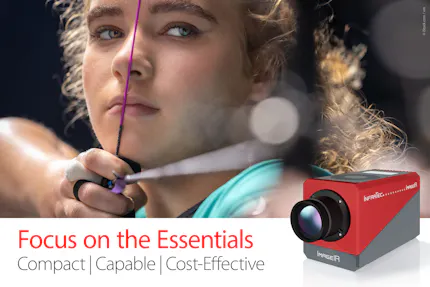
2026-10-01ImageIR® c7300: Focus on the EssentialsNew Compact-Line Camera is Compact, Capable and Cost-effectiveRead onDownload ZIP-File (69675 kB)
Für Anwender deren Fokus auf Wirtschaftlichkeit liegt, bietet InfraTec ab sofort Kameras mit definierter Festausstattung als Compact-Line an. Die ImageIR® c7300 ist dabei das Angebot für preisbewusste Anwender, die eine kompakte und leistungsstarke Thermografiekamera mit gekühlter Photonendetektor-Technologie suchen. Die erste neue Kamera der Compact-Line bietet eine hohe Messqualität für anspruchsvolle Aufgaben, verzichtet jedoch zugunsten wirtschaftlicher Vorteile auf eine individuell optimierte Kameraperformance.
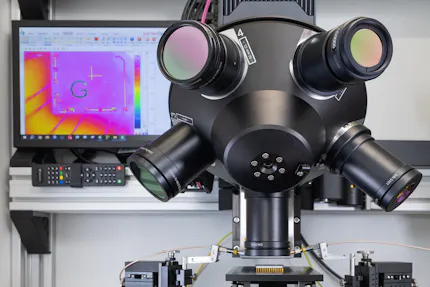
 2026-09-24E-LIT: Thermography Test Bench Becomes Even More EfficientLens turret speeds up measurement processes; new microscope lenses availableRead onDownload ZIP-File (15420 kB)
InfraTec’s modular, automated E-LIT test bench enables contactless and non-destructive testing of electronic and semiconductor components. Thanks to the new lens turret, measurements can now be performed even faster and more accurately. Its compact design – achieved by angling the axis of rotation – facilitates the positioning of contacts against the sample, as required for excitation in Lock-in Thermography
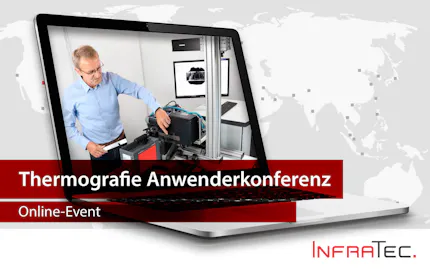
 2026-09-17Online Event: Thermografie-Anwenderkonferenz „Forschung & Entwicklung“ (November 2026)Experience Thermography – Expert Presentations, Technology Demonstrations, and Professional ExchangeRead onDownload ZIP-File (5127 kB)
Our free of charge “Thermografie-Awenderkonferenz” (thermography user conference) on November 5, 2026 provides a forum for professional exchange among users from academia and industry, with a particular focus on applications of thermography for demanding tasks in research and development.
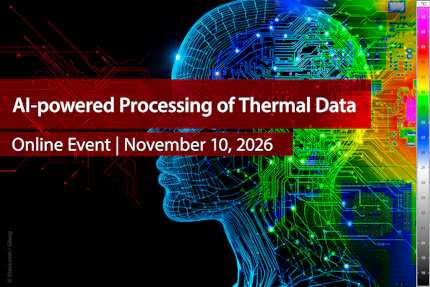
 2026-09-15Online Event: AI-powered Processing of Thermal DataTaking Data Processing, Machine Vision, and Industrial Quality Assurance to the Next LevelRead onDownload ZIP-File (12849 kB)
On November 10, 2026, we invite you to join our free of charge online event, “AI-powered Thermal Data Processing”. Learn more about the use of artificial intelligence to extract and analyze valuable data from thermographic measurements.
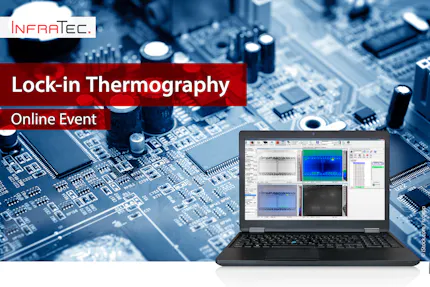
 2026-09-10Online-Event: Lock-in Thermography for Inspection of Electronics and Integrated CircuitsDetecting thermal anomalies and local power losses within shortest test timesRead onDownload ZIP-File (11122 kB)
Our free of charge InfraTec English online event "Infrared Lock-in Thermography for Inspection of Electronics and Integrated Circuits" will provide you with more information about lock-in thermography as a high-precision measurement method for non-contact and non-destructive testing in electronics and electrical engineering.