Overview about Case Studies from Measurement Division

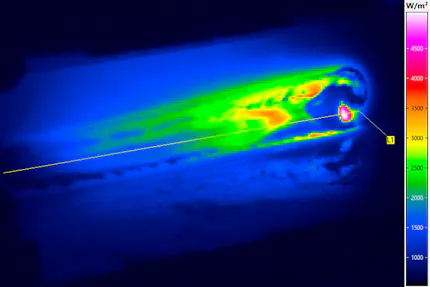
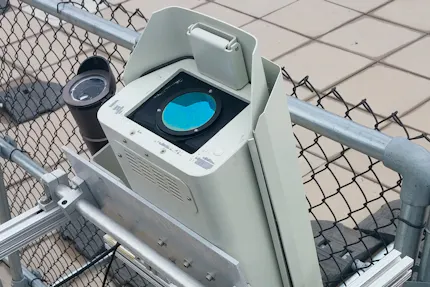
Thermal Images of Freezing Drizzle Droplets
To better understand ice formation in the atmosphere, scientists at the KIT analyzed mechanisms by which freezing, drizzle-sized cloud droplets break apart and release ice fragments, which can trigger the freezing of additional droplets.
Read more about ice formation processes in athmosphere
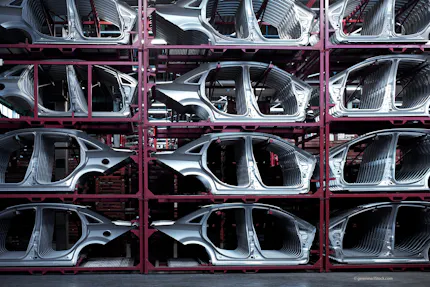
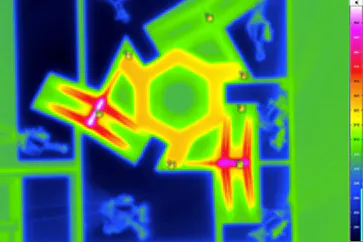
Quality Control in Lightweight Automotive Construction
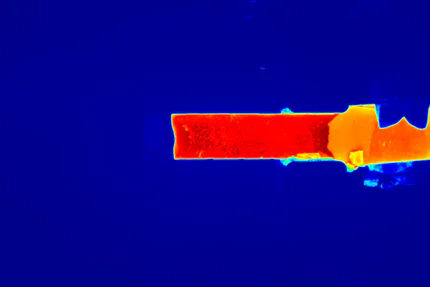
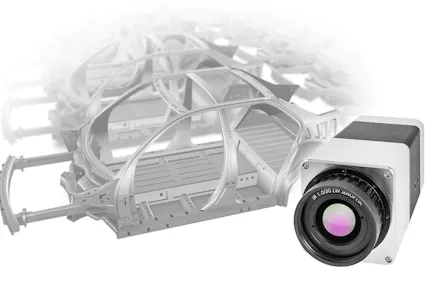
With the InfraTec thermography solution PRESS CHECK, Snop Automotive Zwickau optimizes quality assurance in press hardening of metal sheets and reduces scrap and costs.
Learn more about monitoring with PRESS-CHECK
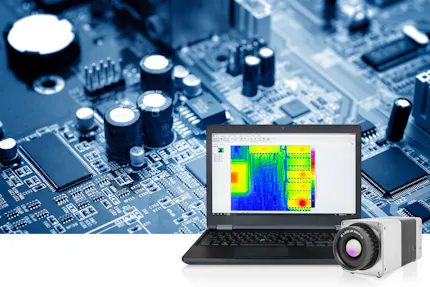
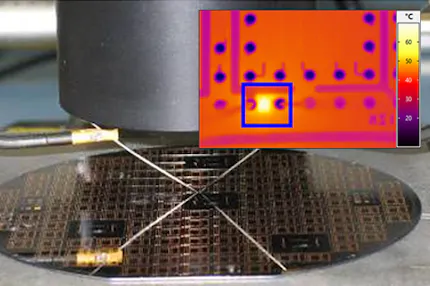
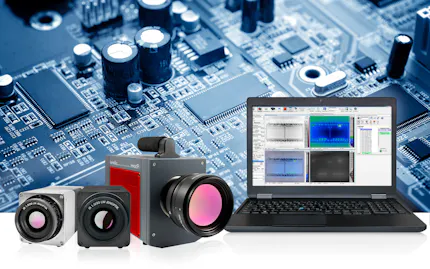
Measurement of Thermal Deformation in Circuit Boards
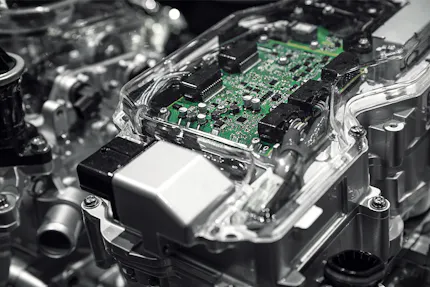
Japanese researchers have developed a combined method of 3D digital image measurement (DIC) and thermography to measure thermal stress-induced deformation of electronical components as early as the design phase.
Learn more about deformation analysis of electronical components
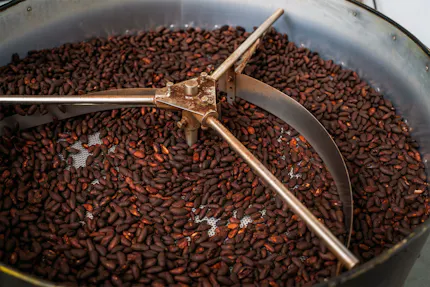
Roasting Cocoa Beans Efficiently and Safely
Akkadia B.V. optimizes the cocoa bean roasting process with its Astraguard™ system using precise thermography from InfraTec. This enables higher quality, improved process control, and enhanced safety.
Learn more about temperature monitoring at roasting of cocoa beans
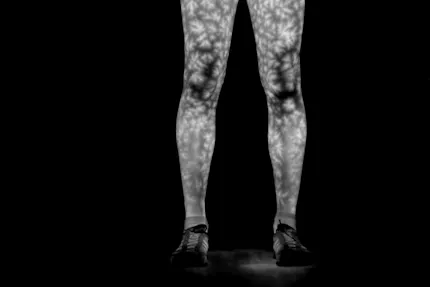
AI-supported Thermography in Performance Physiology
In their latest study, sports scientists at Johannes Gutenberg University Mainz demonstrated how infrared thermography combined with artificial intelligence (AI) improves the understanding of physiological responses to physical stress. Using methods like StereoThermoLegs and ThermoNet, thermal images can be automatically analyzed to precisely detect temperature changes in the legs during running or cycling.
Read the full case study
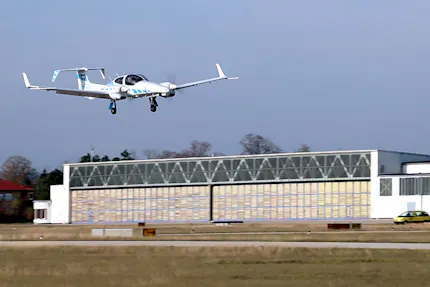
C2Land project: Optically Aided Autonomous Landing of Aircraft
Autonomous driving offers many benefits. What is not yet within reach on the road is already part of everyday life in the air. At large airports, the instrument landing system (ILS) enables commercial aircraft to land automatically and precisely. As part of the “C2Land” project researchers at the Technical University of Braunschweig have developed an optical reference system consisting of a VIS and an infrared camera that enables safe autonomous landing. Specially programmed image processing software can be used to determine the exact position of the aircraft relative to the runway.
Read the Full Case Study
Fault Isolation on Chips and Power Modules at STM
STMicroelectronics is a European manufacturer that produces a wide range of semiconductor components for electronic applications worldwide. The company uses InfraTec’s E-LIT system to perform fault analysis on chips, discrete components, sensors, LEDs, and power modules. Users particularly appreciate the system’s flexibility when testing different components and its ability to visually identify faults with ease.
Read the Full Case Study
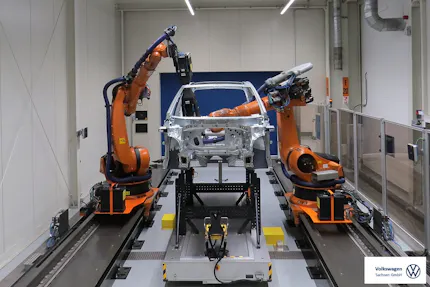
Investment-secure: Testing Procedure at VW is Modernised for a New Joining Technology
When electric vehicles went into production, the joining process was replaced by resistance spot welding. The INDU-SCAN test bench already in operation was converted using existing technology and modernised with intelligent algorithms and robot technology to enable quality control of the joined sheet metal parts.
Modernisation of an existing thermography test bench
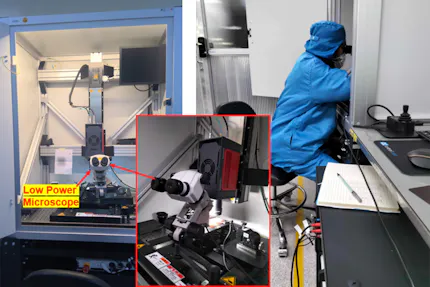
Tracing the Solar System´s Origin via Microscopic Active Thermography
Geological field research on Earth provides easily accessible material, but this has been significantly altered by the Earth's history. Unadulterated samples from the early days of the solar system can therefore only be obtained in space, where minor planets have preserved them for billions of years. Japanese researchers have been able to use microscopic active thermography to prove that the minor planet Ryugu contains such original material.
Read more about the use of ImageIR® 8300 for anlysing the Ryugu probes
3D Printing under the Thermographic Microscope
Additive manufacturing has developed rapidly from its original field of prototype manufacturing, becoming a complete production technology for use on an industrial scale. Precise monitoring of machinery, equipment, materials and – above all – temperatures is of vital importance in this regard.
Get further information about thermography in additive manufacturing
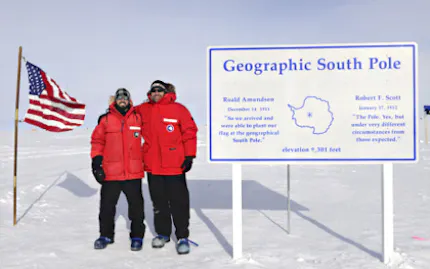
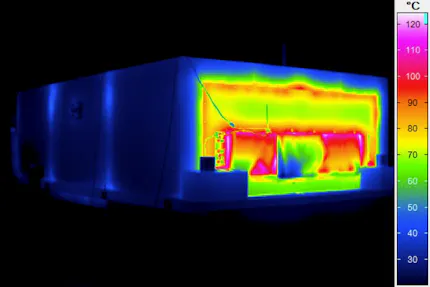
Antarctic Building Thermography
Building thermography is a popular and established application for thermal cameras. Today the related services are frequently provided with simple “pistol” style cameras and from low-cost service providers. But when it comes to perform precision thermography you definitely need serious equipment and professional users!
Get further information about building thermography
Thermal Imaging in Plastics Engineering
A core topic of modern materials research is the research on plastics as a versatile material for various technological applications. Quite often, industrial applications are developed from academic basic research. At the Faculty of Mechanical Engineering at the University of Paderborn, Kunststofftechnik Paderborn (KTP) works intensively on this topic using a VarioCAM® HD for this purpose.
Get further information about thermography in material research
Thermography on the Trail of the Fault
Thermographic damage and functional analysis of electronic components has become one of the established testing methods in electrical engineering. This method is also used for research purposes at the Institute for Electrical Systems and Energy Logistics at BTU Cottbus-Senftenberg. In this context, Prof. Dr. Ralph Schacht focuses intensively on material and system characterization as well as non-destructive failure analysis of printed circuit boards, electronic components, microelectronics, and composite systems in assembly and interconnection technology.
Read more about non-destructive failure analysis on electronic components
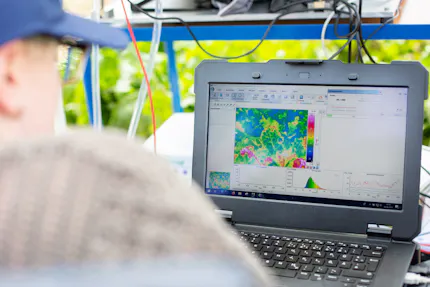
The Seeds of the Future
Environmental conditions today often tend towards extremes. Many areas are very humid and wet, while others are predominantly dry. Particularly in the second case, cultivating raw materials such as grain, beet or maize is a challenge. A challenge that KWS SAAT SE & Co. KGaA is facing. As part of its plant research, the company uses the VarioCAM® HD head 900 infrared camera from InfraTec to analyse the behaviour of plants during drought stress and pest infestation.
Read more about thermography in plant research
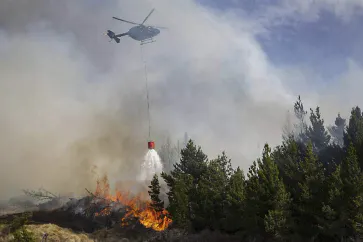
Catching Fire – Aerial Fire Mapping
Wildfires are a permanent threat for several regions around the world – and the global climate change is adding to the number and severity of these events. Fighting them is a huge challenge, strong winds, heat and inaccessibility make it even more difficult and dangerous for those who risk their life to protect others. One approach to tackle wildfires is the usage of airborne fire mapping.
Read more about aerial firemapping
Thermal Micro Actuators for Nanotechnologies
Microelectromechanical systems (MEMS) offer a wide range of possible applications in the field of nanotechnology. Everyday examples are the position recognition of mobile phones and the use in airbags, digital cameras or pacemakers. Other applications can be found above all in the field of miniaturised medical diagnostics. Growing demands on miniaturisation affect both the system solutions required for this and the sensors and control elements to be developed.
Read more about thermography in nanotechnologies
Power Electronics – Efficient Control of the Futures Energy
The energy efficiency of electronic components is playing an increasingly important role in numerous fields of application. What’s more, in our age of electronics and high-tech, there is a demand for ever-faster active components, higher power densities in miniaturized systems, and absolute reliability. Added to this are the demands for environmentally conscious resource procurement and the requirement that increases in module performance must go hand in hand with lower energy consumption.
Get further information about thermography for power electronics
Fire Protection in Wood Pellet Storage
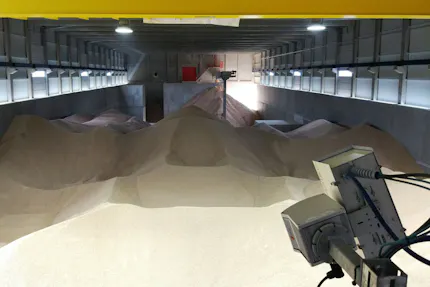
Wood pellets have become increasingly important in recent years as an alternative, high-quality fuel. For WUN Bioenergie GmbH, regionally produced pellets made from sustainably harvested wood offer an opportunity to meet the growing demand for renewable fuels. However, like other fuels, stored wood pellets need to be secured and monitored around the clock to prevent causes of devastating damage in the event of a fire, for example. Robust and reliable thermography solutions are a suitable tool for plant protection here.
Get further information about the FIRE-SCAN Monitoring System
Early Fire Detection in Incineration Plant
The Amager Resource Center (ARC) is a waste incinerator like no other. From the roof of the Waste to Energy facility, skiers and snowboarders wind their way down on green plastic mats from a height of about 80 meters, even in the summer. The city hall of the Danish capital, Copenhagen, is just five kilometres away. The location, which is almost in the heart of a European capital, as well as its use as a public leisure centre, shows how much confidence operators place in the safety of the ARC. An important component in the security concept is the WASTE-SCAN infrared monitoring system for early fire detection by InfraTec.
Get further information about WASTE-SCAN Monitoring System for safety in Waste-to-Energy Plant
Process Monitoring During Open‐die Forging
Anyone who wants to produce curved or twisted steel and aluminium components, can rely on bending forging nowadays. Components with complex geometries can now be manufactured by means of this incremental forging variant.
Get further information about VarioCAM® HD head 800 for process monitoring during open‐die forging
WASTE-SCAN Against “Black Clouds”
Many tons of waste are bunkered and processed every day in waste recycling plants. It is not uncommon for this to contain highly flammable materials. If ignition sources get into this storage area, for example during delivery, there is an acute risk of fire. Therefore, waste incineration plants are subject to the strictest fire protection requirements in order to prevent endangering the environment and local residents. For this reason, an extremely important preventive measure is the permanent monitoring of the waste bunker and, if necessary, the surrounding areas to detect a fire even before it starts.
Get further information about WASTE-SCAN Monitoring System for safety in plant operation
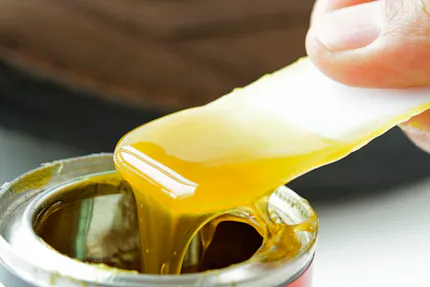
Monitoring the Surface Temperature on Curing Epoxy Resin Samples
Epoxy resin systems are mostly used as a matrix material in fibre composites. In a variety of manufacturing processes, the corresponding resin system is processed in a flowable state. The material only acquires its rigidity in a subsequent curing process. This is characterized by an exothermic chemical reaction with a pronounced temperature dependence.
Get further information about curing epoxy resin samples with VarioCAM® HD research 800
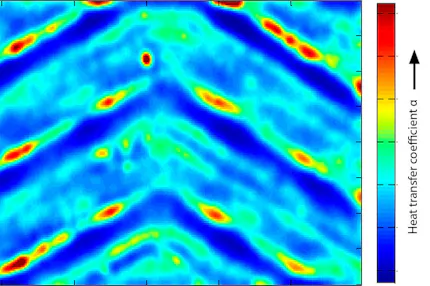
Infrared Thermography for Determining Heat Transfer Coefficients
Technical systems and devices are often subject to the influence of thermal energy or heat up due to internal processes. Their efficiency and service life can be increased, for example, by optimised thermal management. The installed active components are usually optimised extensively for this purpose. Passive components, on the other hand, are often neglected in this respect.
Get further information about ImageIR® 8300 for determining heat transfer coefficients
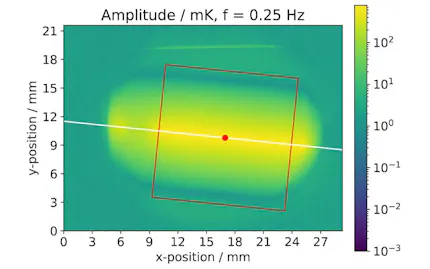
Analysis of the Thermal Conductivity in Nano- and Mesostructured Polymer Systems
New materials with precisely controlled optical and thermal transport characteristics can make a large contribution to resource-saving thermal management. Scientists of the University of Bayreuth are pursuing this vision. They use infrared thermography to quantitatively determine thermal conductivity in nano- and mesostructured polymer materials.
Get further information about Lock-in Thermography with VarioCAM® HD research 800
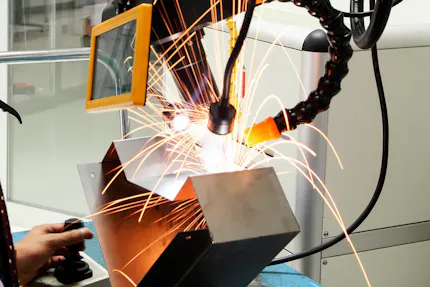
Inline Process Control for Quality Assurance of Weld Seams
As part of the 3dStahl collaborative project, a 6-axis robot, equipped with a welding machine, was attached upside down to a wall-to-wall wire rope hoist kinematics system in order to automate joining processes involving small quantities or even individual parts such as large-scale objects (lock gates, bridges).
Get further information about continuous process quality assurance using an infrared camera
Inspection of District Heating Pipelines
District heating is generally regarded as an extremely efficient and - under certain conditions - as an environmentally friendly form of energy supply. Based on industrial waste heat or renewable energy sources, it offers the possibility to heat water as a carrier and thus supplying private, commercial and industrial customers. Netze Duisburg GmbH is doing to control the city's entire district heating network supported by InfraTec infrared cameras.
Read more
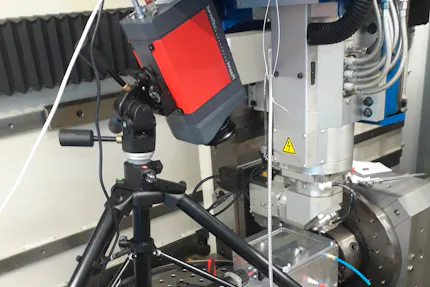
Laser High-temperature Capillary Gap Brazing
Lasers are extremely versatile tools in industry and manufacturing technology. Due to their flexibility, they serve as a key technology for implementing the goals of industry 4.0. Although laser cutting and welding are nowadays regarded as turnkey technologies, the majority of laser applications, for example joining of hybrid materials, 3D printing or ultra-short pulse processing, still require considerable research and development.
Read more about high-end-thermography with ImageIR® 8300 hp
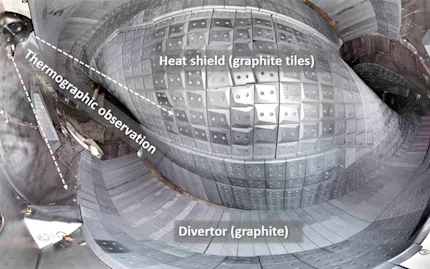
Monitoring Plasma at Wendelstein 7-X
What will the energy supply of the future look like? The Max Planck Institute for Plasma Physics (IPP) in Greifswald is dealing with this question.
Read more about thermographic analysis of a fusion plant with ImageIR® 9300
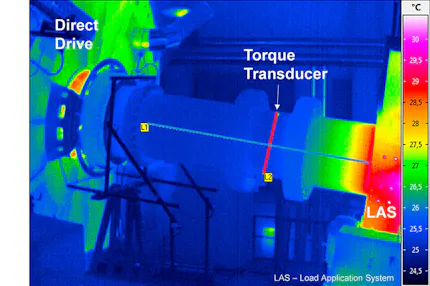
Precise MN·m Torque Measurement in Wind Turbine Test Benches
The generation of electricity power produced by wind turbines is expanding worldwide. This development is associated directly with an increasing demand to test the product reliability, functionality and life durability of wind turbine subsystems like the drive train.
Usage of VarioCAM® High Definition for torque measurement
Combination of Digital Image Correlation and Thermographic Measurements
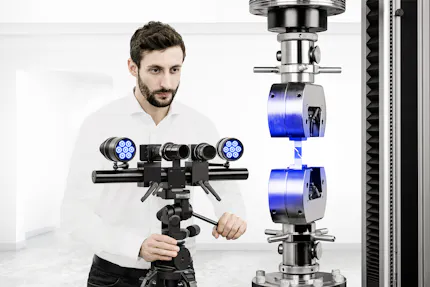
The combination of measuring results from the digital image correlation (ARAMIS, DIC) and temperature measuring data from infrared cameras enables the simultaneous analysis of the thermal and mechanical behavior of test specimens in the materials and components testing field.
Further information about ARAMIS system from GOM and infrared cameras from InfraTec
Early Fire Detection in the Power Plant
Today's power and heating supply in the city of Bern is hardly imaginable without the Forsthaus energy centre (Energiezentrale Forsthaus – EZF). This power plant combines a refuse incineration plant (KVA) with a wood heating power plant and a combined gas‐steam power plant. The Swiss company relies on the WASTE‐SCAN infrared monitoring system from InfraTec for the early fire detection.
Further information about early fire detection in the power plant
Thermal Stress Analysis of Metals
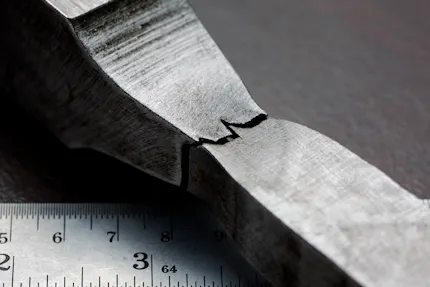
Stress changes during tensile testing provide information about material properties of metals such as tensile strength. With the help of thermographic cameras metallic solid bodies can be tested for such stress changes.
High‐End‐Thermography with ImageIR® 8300 hp
Nickel‐titanium Wires in Tension Test
How do solid materials change structurally? The engineers Prof. Stefan Seelecke and Marvin Schmidt from Saarland University investigate this fundamental question in materials research. Both consider this topic with the help of micro-thermography. Their cutting‐edge basic research ensures that we will have even more energy‐efficient electric devices to use at home in future.
Usage of ImageIR® 9300 at Saarland University
Thermography for Climate Research
Climate research is one of the most exposed types of academic research these days. With the continuous discussion about extreme weather events and long‐term implications of human‐made climate factors the related science has become a part of everyone´s daily life.
Thermography for Climate Research
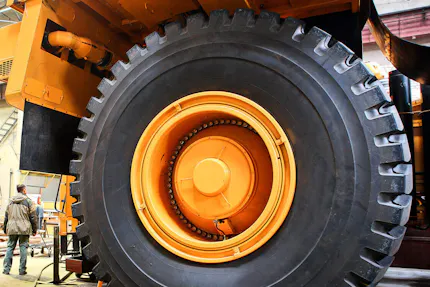
Tire Inspection with Thermography
Mechanically stressed car components like tires are a continuous issue for quality inspection and related R&D improvements. At Bridgestone Corporation in Hofu (Yamaguchi prefecture in South-Western Japan) new test procedures for off-the-road tires for construction and mining vehicles (OR tires) had to be developed to meet the literally growing scale of performance concerning the carrying capacity.
Read more about tire inspection with ImageIR® 8300
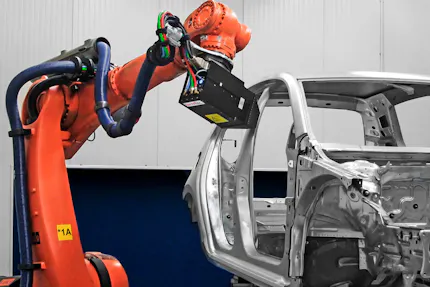
Quality Assurance with Active Thermography in Series Test at Zwickau Volkswagen Plant
Non-destructive testing methods are becoming increasingly more important in the industry. One reason is that they cost much less than other test methods. As a very elegant method, the active heat flow thermography method is now firmly established as a powerful method of non-contact and non-destructive testing of products of different manufacturing technologies.
Usage of ImageIR® to test laser welds of body components
Thermography in CFRP Processing
Many new systems operate at very high laser intensity levels and consequently require close control of thermal processes. This is achieved by the use of infrared thermography which is both contact-less and provides imagery.
Usage of ImageIR® 8300 at Laser Zentrum Hannover e.V.
Thermography for Optimisation of Installed Wind Turbines
Due to the decreasing number of suitable locations for wind turbines and the increasing push towards renewable energy sources, new activities have been introduced to improve the efficiency of rotor blades for wind turbines.
Usage of ImageIR® for Optimisation of Installed Wind Turbines
Thermographic Microscopy in Electronics
At the same time that the performance of electronic components is being driven ever higher the demand for thermal management at ever smaller scales is also occurring.
Usage of the infrared camera ImageIR® 8300 at the Fraunhofer-Institut für Silizium-technologie (ISIT)“")
Infrared Thermography Applications at “Kunststoff-Zentrum in Leipzig (KuZ)”
Due to relative good emission ratios of many plastics, infrared thermography is suitable for the extended characterisation of plastic processing technology and its optimisation. This application report exemplifies infrared thermography applications for plastic processing and inspection technologies at the KuZ.
Read more abour infrared thermography applications at Kunststoff-Zentrum in Leipzig gGmbH
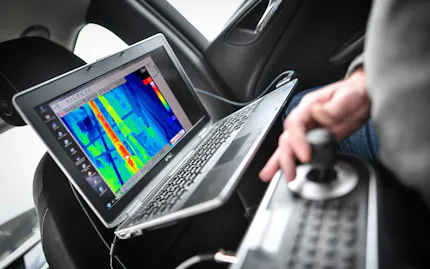
Vehicle-Bound Mobile Surveillance Solution from InfraTec
2012 marked an important milestone for the Eastern European Countries of Poland and the Ukraine – the jointly rganized UEFA European Football Championship 2012. While this kind of events generate a wide public attraction there are certain background activities which contribute to a seamless progress significantly: Security and logistics are two core tasks to be handled by the relevant local authorities.
Usage of VarioCAM®-series as vehicle-bound surveillance solution
Automatic Ladle Monitoring
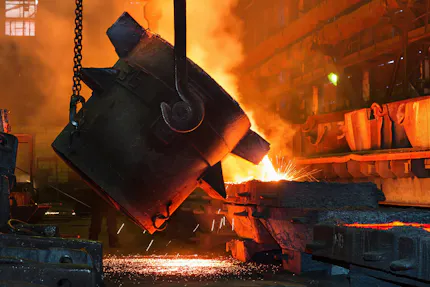
A ladle typically contains up to 290 tonnes of hot, liquid steel when it is transporting the melted good to the continuous caster. Ladle-temperature measurements with contact-free infrared thermography are an ideal basis for the early detection of impending breakage.
Reliable Thermographic Complete Solutions LHSD from InfraTec
Thermography in Electronics Development
At Delphi’s laboratory plant “Test & Validation Services”, thermography is used for design and product validation as part of quality assurance. Therewith, a stable hardware basis is set for integrating new technologies in motor vehicles that again present a substantial contribution to traffic safety.
Usage of infrared thermography at Delphi Deutschland GmbH
Thermography in Quality Assurance
Quality assurance and process enhancement is essential to complex industrial processes. Leading businesses rely on certified quality management, to allow for matters of quality and environmental sustainability even during the early stages of manufacturing development. In co‐operation with a leading automotive supplier, InfraTec GmbH enhanced the automated thermography monitoring solution PRESS‐CHECK to inspect the product quality of press hardening with an accuracy of 100 %.
Automated Infrared Thermography for Temperature Measurement in Industrial Processes
Thermography for Insulation Checks
Hot industrial processes must always be well shielded to prevent energy loss and protect neighbouring equipment and employees. Thermography helps to identify weak points in insulation and provides initial indications of necessary repairs.
Usage of VarioCAM® series at Morgen Thermal Ceramics
Thermography for Quality Assurance
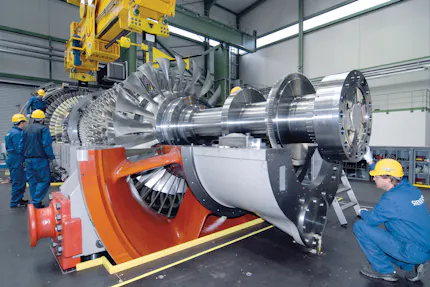
Today gas and steam turbine power plants by the SIEMENS AG are more than ever complex high-tech products. Heavily stressed parts like the turbine blades are tested with the latest measurement techniques for example with infrared thermography.
Usage of ImageIR® 8300 for quality assurance at Siemens AG
Thermography for Building Inspections
ARCHIMEDES Facility-Management GmbH uses its infrared camera predominantly for revisions and securing of quality standards during the construction phase of newly erected buildings and the refurbishment of older buildings. Thereby the detection of construction faults like thermal bridges, poor insulations or air leakages plays a major role.
Usage of VarioCAM®-series for building inspections
Thermography for Environmental Studies
In order to protect bat populations firstly their ecology has to be understood but it can be very difficult to study the small, nocturnal mammals in the wild. Infrared thermography offers solutions to many of the problems faced by bat ecologists.
Monitoring of bats with VarioCAM®-series
Thermography in Process Automation
The company Isabellenhütte Heusler GmbH & Co. KG has identified this potential at an early stage and uses infrared thermography for the quality assurance of their low resistance precision resistors.
Usage of VarioCAM®-series at Isabellenhütte Heusler GmbH & Co. KG
Thermography for Health
With the use of a thermometer only an indication of a spot temperature can be obtained. Infrared thermography provides the complete picture, non-invasive temperature measurement of the complete body part.
Usage of VarioCAM series for human medicine